
POI Interconnection Studies: What Utilities Require Before You Connect
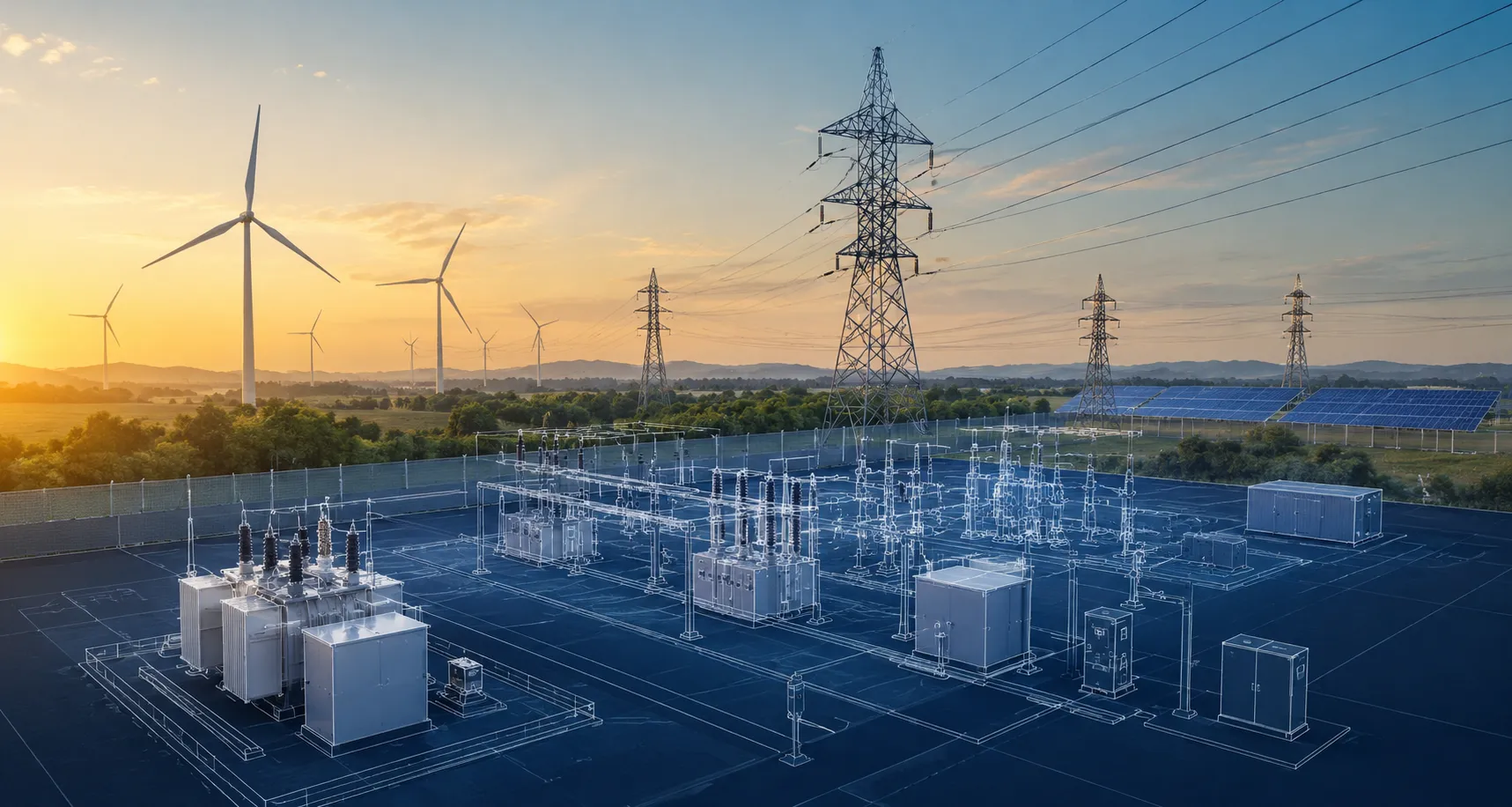
Most developers don’t lose time on a POI interconnection study because the engineering is unfamiliar. They lose time because they submit an interconnection request before the data package, single line diagrams, and modeling assumptions are complete enough to survive the utility’s first round of review and every incomplete submission resets a clock that’s already measured in months, not weeks.
A POI interconnection study is how a utility, RTO, or ISO determines whether and under what conditions, your project can physically and electrically connect at a specific Point of Interconnection without degrading the reliability of the existing grid. It’s not one study. It’s a sequence of studies, each with its own data requirements, its own review cycle, and its own way of quietly restarting the queue if something upstream changes.
This article breaks down what utilities actually require before they’ll approve a connection, where projects most commonly stall, and how to walk into the process with a package that moves through review instead of bouncing back for revisions.
What a POI Interconnection Study Actually Evaluates
At its core, a POI interconnection study answers three questions the utility needs settled before granting a connection:
- Can the existing system absorb this project without exceeding thermal, voltage, or short-circuit limits at and around the proposed POI?
- What upgrades, if any, does the transmission or distribution system need to safely accommodate the project?
- Who pays for those upgrades, and in what proportion, if the project shares a POI or network path with other interconnecting generators?
None of that can be answered from a single-line diagram alone. It requires load flow, short circuit, and stability modeling run against the utility’s own system model, which is exactly why the utility, not the developer, controls the study process, even though the developer is the one paying for it and waiting on it.
Need Engineering Support for Your Power Project?
American Power Engineers delivers power system studies, substation design, renewable energy engineering, BESS projects, NERC compliance, MEP engineering, and POI interconnection services.
Explore Our Engineering ServicesThe Three Study Stages Utilities Run You Through
Nearly every ISO/RTO and vertically integrated utility structures interconnection review around the same three stages, even though the naming varies slightly by region.
1. Feasibility Study
A high-level screening pass. The utility checks whether the proposed POI and capacity are broadly workable, without detailed protection or dynamic modeling. This stage exists to catch obvious dealbreakers early, a POI with no available capacity, a voltage class mismatch, a location that would require a new transmission line just to reach the interconnection point.
2. System Impact Study (SIS)
This is where the real engineering happens. The utility runs detailed load flow, short circuit, and often stability and dynamic modeling to determine the specific network upgrades your project triggers. If your project’s interconnection request is queued behind others at the same POI or on the same network path, the SIS also has to account for those earlier-queued projects, which is where restudies most often originate.
3. Facilities Study
Once the SIS defines what upgrades are needed, the facilities study prices and schedules them: the specific equipment, construction scope, and cost estimate for the utility-owned facilities required to interconnect your project. This is the study that feeds directly into your Generator Interconnection Agreement (GIA).
Each stage produces its own data requirements, and each one can trigger a restudy if a higher-queued project ahead of yours changes its capacity, withdraws, or gets restudied itself a cascading effect that’s one of the most common (and most frustrating) sources of delay in the entire process.
What Utilities Require Before They’ll Move Your Study Forward
Before a utility will even begin substantive review, most require a data package that includes:
Planning a Solar, Wind, BESS, or Grid Interconnection Project?
Our engineering team helps project owners, developers, utilities, and facility teams move from technical planning to reliable project execution.
View Engineering Services- A complete single-line diagram showing generation, step-up transformation, collection system, and the proposed point of common coupling
- Equipment ratings and manufacturer data for generators, inverters, transformers, and protective relaying — not placeholder or “TBD” values
- Short-circuit contribution data for the facility, including fault current withstand ratings
- Dynamic model files in the format the utility’s planning group uses (PSS/E, PSCAD, or equivalent), particularly for inverter-based resources
- A completed interconnection application with the required study deposit, which varies by ISO/RTO and by study stage
- Site control documentation in many jurisdictions, proving you have legal access to the proposed interconnection site before the utility will commit study resources to it
Utilities reject or pause applications constantly for incomplete dynamic models and generic equipment data substituted for actual manufacturer specifications, both because they can’t run a meaningful system impact study on placeholder inputs, and because incomplete submissions are treated as invalid for queue position purposes in most tariffs.
Need Engineering Support for Your Interconnection Study?
American Power Engineers delivers POI interconnection studies, feasibility and system impact analysis, and facilities study support for developers, EPCs, and utilities across North America.
Explore Our Interconnection Services
Where POI Interconnection Studies Get Delayed or Restudied
A few patterns account for most of the delay we see across POI interconnection studies:
- Queue cascading. A higher-queued project ahead of yours changes size, technology, or POI triggering a restudy of every project studied alongside it, including yours, even if nothing about your project changed.
- Incomplete or inconsistent equipment data, especially inverter dynamic models submitted late or in the wrong format for the utility’s simulation software.
- Underestimated network upgrade costs, which surface late in the System Impact Study and can materially change a project’s economics after a developer has already committed capital based on feasibility-stage estimates.
- Site control gaps discovered mid-study, particularly for projects that were filed before finalizing land agreements.
- Cost allocation disputes among multiple generators sharing a POI or network upgrade, which can stall a facilities study even after the engineering itself is complete.
Most of these are avoidable with the right preparation before filing, see our power system studies team’s approach to load flow and short-circuit modeling for how a pre-application study can surface these issues before the utility’s clock starts.
Regional Differences Matter More Than Most Developers Expect
Study timelines, data requirements, and cost allocation methodology are not standardized across the country. ERCOT, PJM, MISO, SPP, and vertically integrated utilities each run their own tariff-defined process, their own study windows, and their own rules for how network upgrade costs get assigned across interconnecting generators.
A project moving through ERCOT’s Generation Interconnection or Small Generator Interconnection Procedures faces a materially different timeline and data package than the same project would in PJM’s or MISO’s queue.
See our ERCOT interconnection services for how we structure study support specifically around ERCOT’s process and deadlines.
How to Prepare Before You Submit an Interconnection Request
- Run a pre-application feasibility screen on your proposed POI before you file — checking available capacity and obvious constraints costs far less than discovering them mid-queue.
- Finalize equipment selection early enough that manufacturer dynamic model files are available for submission, not “in progress.”
- Secure site control before or concurrent with filing, so the application isn’t vulnerable to a site-control challenge mid-study.
- Budget for network upgrade cost uncertainty between the feasibility and system impact stages — treat the feasibility-stage estimate as a planning number, not a final one.
- Track queue position and adjacent projects, since a restudy trigger from another project can affect your timeline even when your application is fully complete.
Preparing to File an Interconnection Request?
American Power Engineers supports developers and EPCs through feasibility, system impact, and facilities study stages, including dynamic modeling and utility-specific data packages built to move through review the first time.
FAQs
What is a POI interconnection study?
A POI interconnection study is the utility- or ISO-led engineering review that determines whether a project can safely connect at a proposed Point of Interconnection, what network upgrades are required, and how those upgrade costs are allocated. It’s typically completed in stages: feasibility, system impact, and facilities study.
How long does a POI interconnection study take?
Timelines vary significantly by ISO/RTO and by queue volume, but a full sequence from feasibility through facilities study commonly runs from several months to multiple years, particularly in high-volume interconnection queues where restudy cycles are common.
Who pays for a POI interconnection study?
The interconnecting developer generally pays study deposits and, ultimately, the cost of the studies themselves. Network upgrade construction costs are typically allocated according to the tariff’s cost allocation methodology, which may assign costs across multiple generators sharing a POI or network path.
What causes a POI interconnection study to be restudied?
The most common trigger is a change to a higher-queued project at the same POI or on the same network path — a capacity change, technology change, or withdrawal — which can require the utility to rerun studies for every project studied alongside it, including ones that haven’t changed at all.
What data does a utility need before starting a system impact study?
At minimum: a complete single-line diagram, actual (not placeholder) equipment ratings, short-circuit contribution data, and dynamic model files in the utility’s required simulation format. Missing or generic data is one of the most common reasons a study stalls before it starts.
Does a POI interconnection study guarantee my project can connect?
No. A completed study defines the technical conditions and cost of connecting — it doesn’t guarantee the project will proceed. Developers still need to execute a Generator Interconnection Agreement and, in most cases, meet financial and site-control milestones tied to their queue position.
Is the interconnection process different in ERCOT than in PJM or MISO?
Yes. Each ISO/RTO operates under its own tariff-defined interconnection procedures, with different study windows, data requirements, and cost allocation rules. A study approach built for one region generally doesn’t transfer directly to another without adjustment.
Why Work With American Power Engineers on Your POI Interconnection Study
American Power Engineers supports POI interconnection studies with the same power system modeling depth used across our broader studies and substation work, not generic templated filings. Our support includes:
- Pre-application feasibility screening to surface constraints before you file
- System impact and facilities study coordination, including dynamic modeling for inverter-based resources
- Utility- and ISO-specific data package preparation built to pass first review
- Network upgrade cost estimation support to manage project economics through each study stage
- Coordination across ERCOT, PJM, MISO, SPP, and vertically integrated utility processes
Our team also supports the studies that feed directly into a defensible interconnection application — see our Power Systems Engineering team for the load flow and short-circuit modeling behind a strong POI submission and our NERC compliance overview for how interconnection studies intersect with broader reliability compliance obligations.
Contact American Power Engineers: Contact Form | Email: info@americanpowerengineers.com
Work With American Power Engineers
Expert engineering support for power system studies, substation design, renewable energy projects, BESS engineering, NERC compliance, MEP engineering, and POI interconnection services.
Explore All Engineering Services